Located in Grândola, Monte das Casolas is a rural tourism project designed around the ecological restoration of the estate and the revitalization of its traditional agricultural systems, adapting them to contemporary uses.
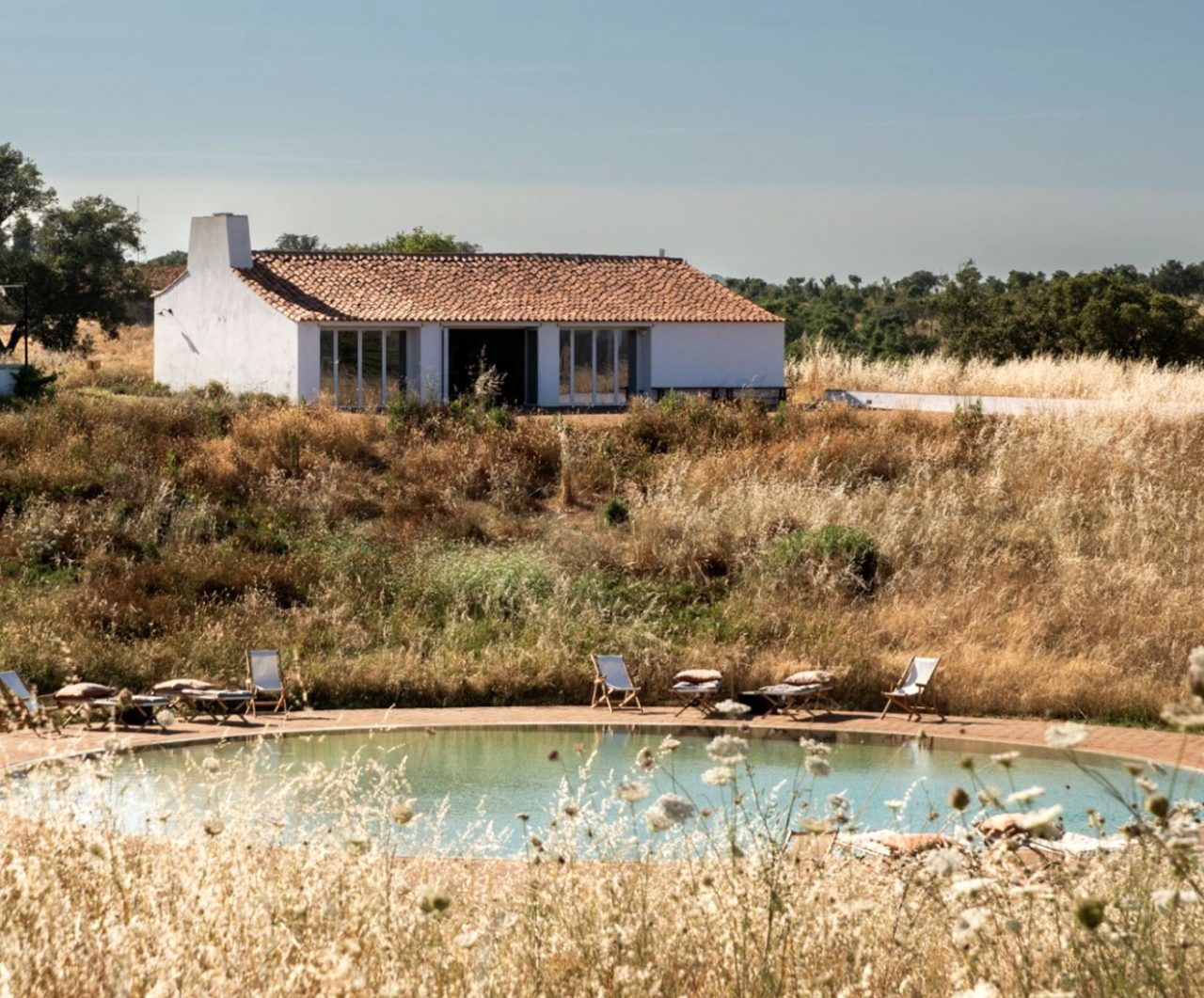
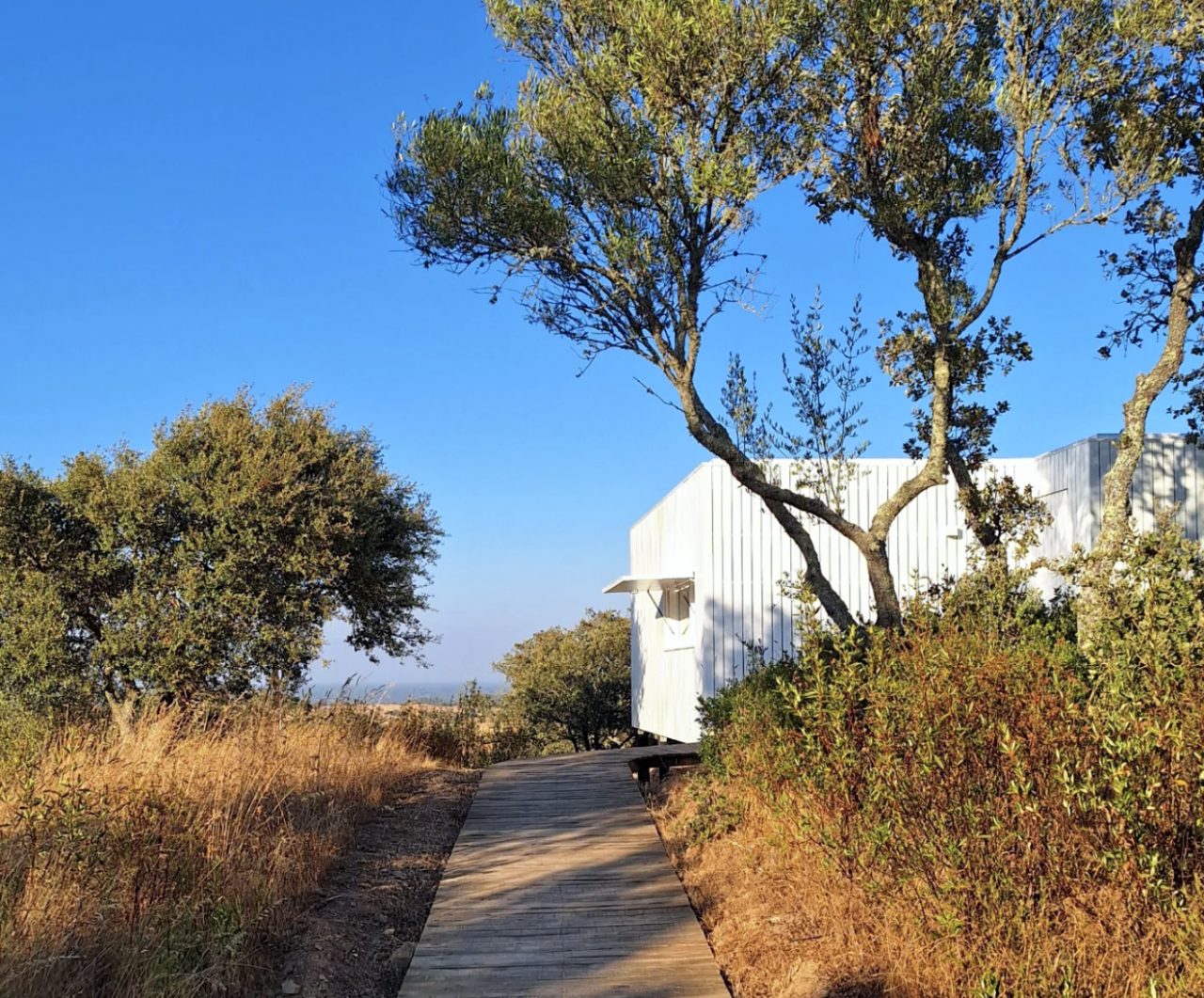
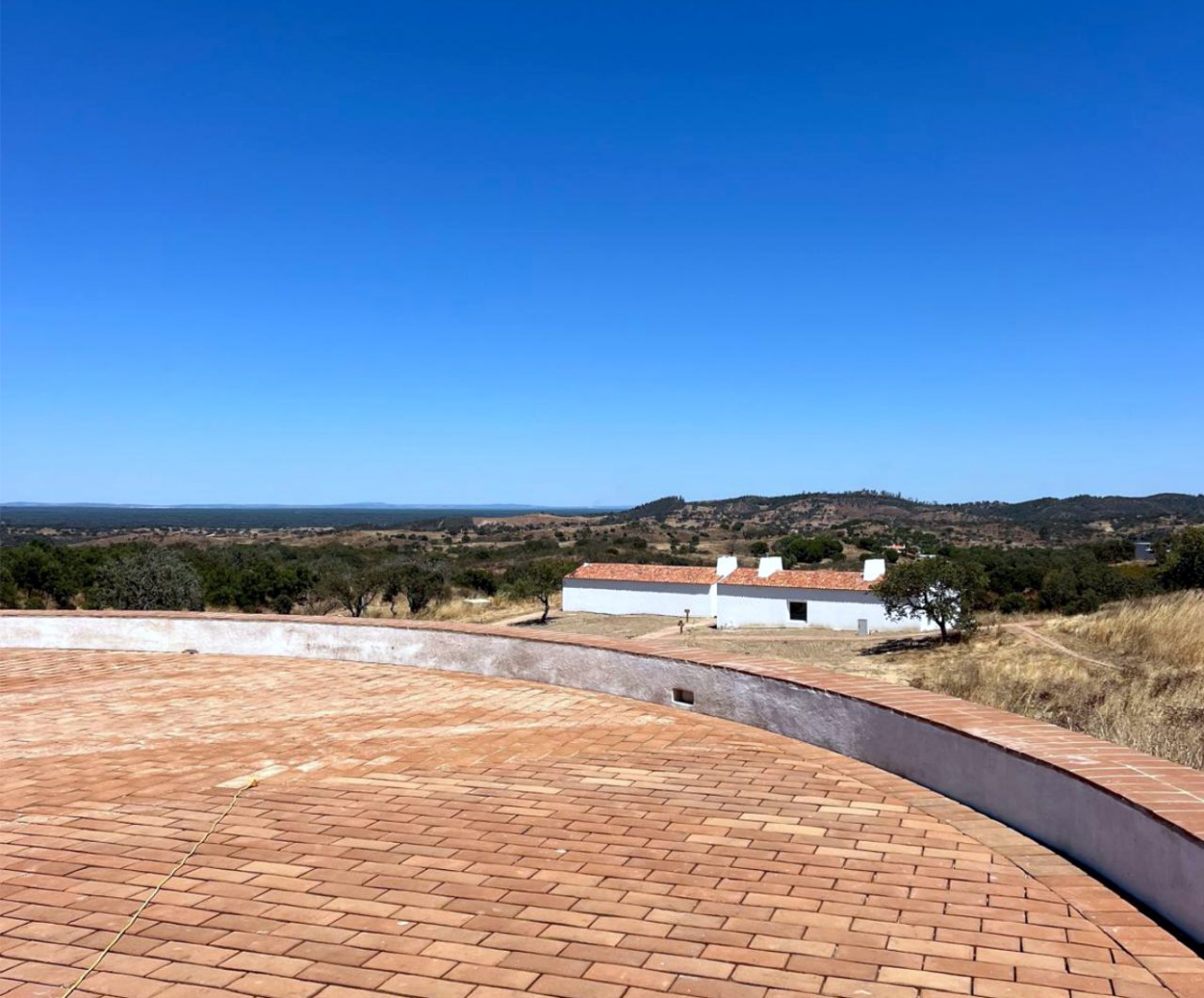
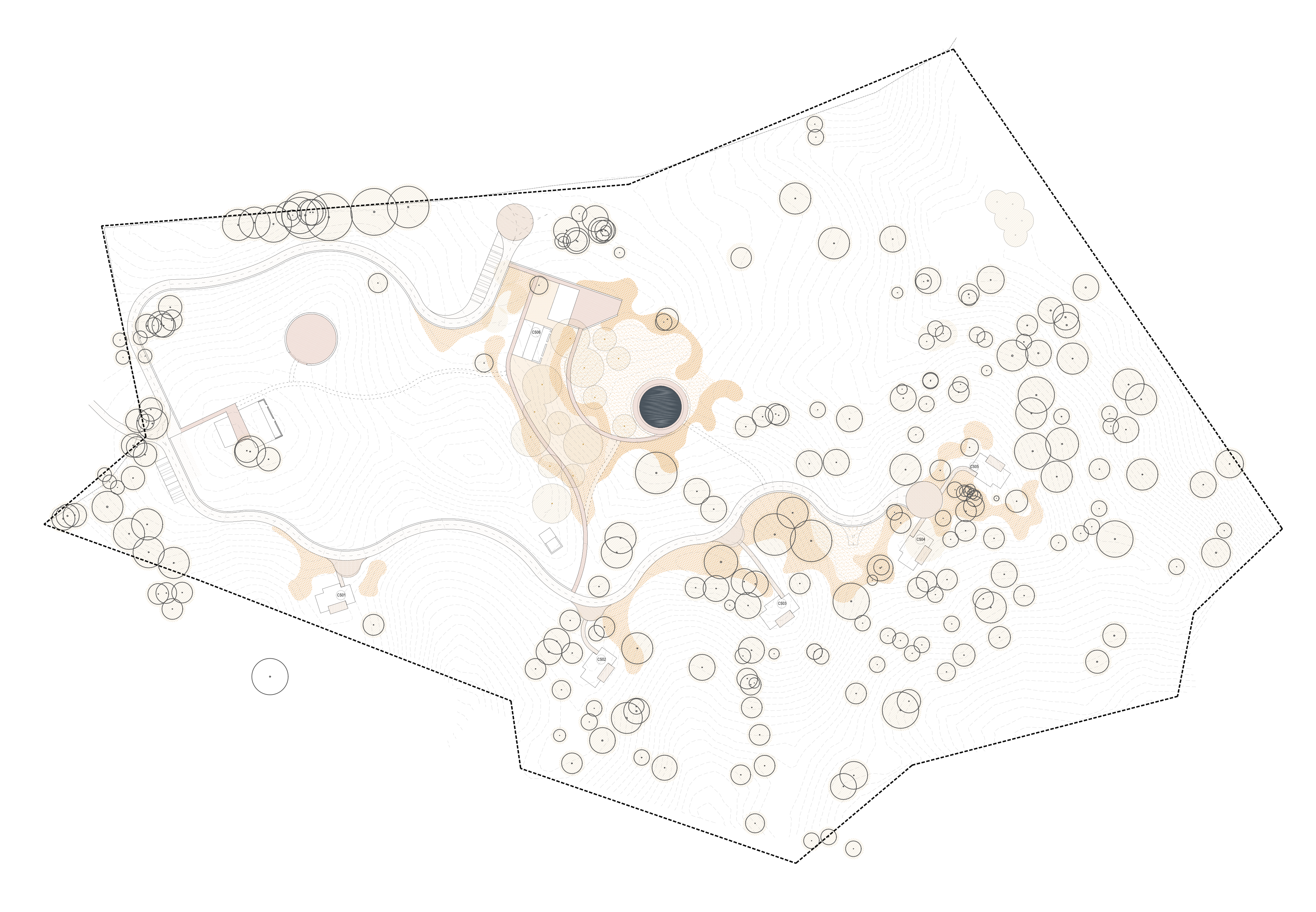
The five new guest houses are thoughtfully positioned across the property to take advantage of the views and ensure privacy. Most are set on gentle hilltops, overlooking the valleys and rolling landscape of Monte das Casolas. The layout was carefully planned to make efficient use of existing infrastructure and resources. The original clusters of buildings have been restored and expanded to accommodate complementary uses such as dining, workshops, and leisure activities. Additional features — including a traditional threshing floor and a swimming pool — add to the experience and highlight the rural character of the site.
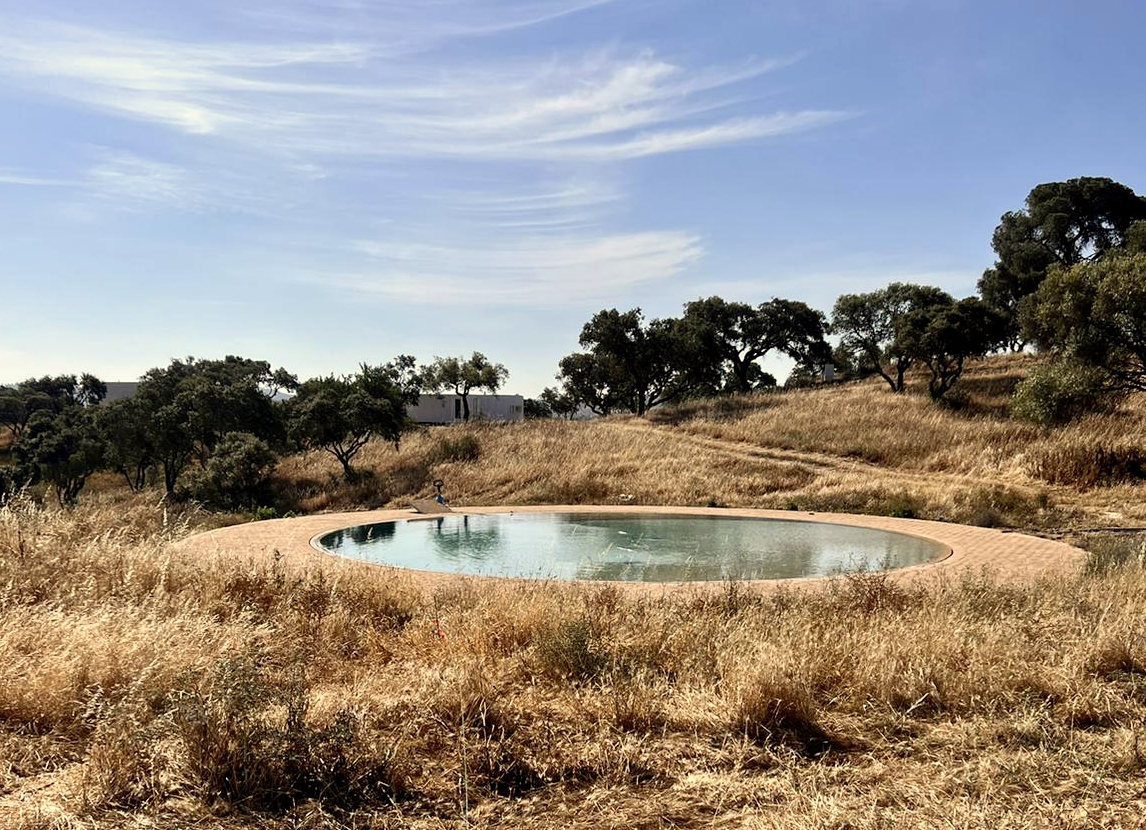
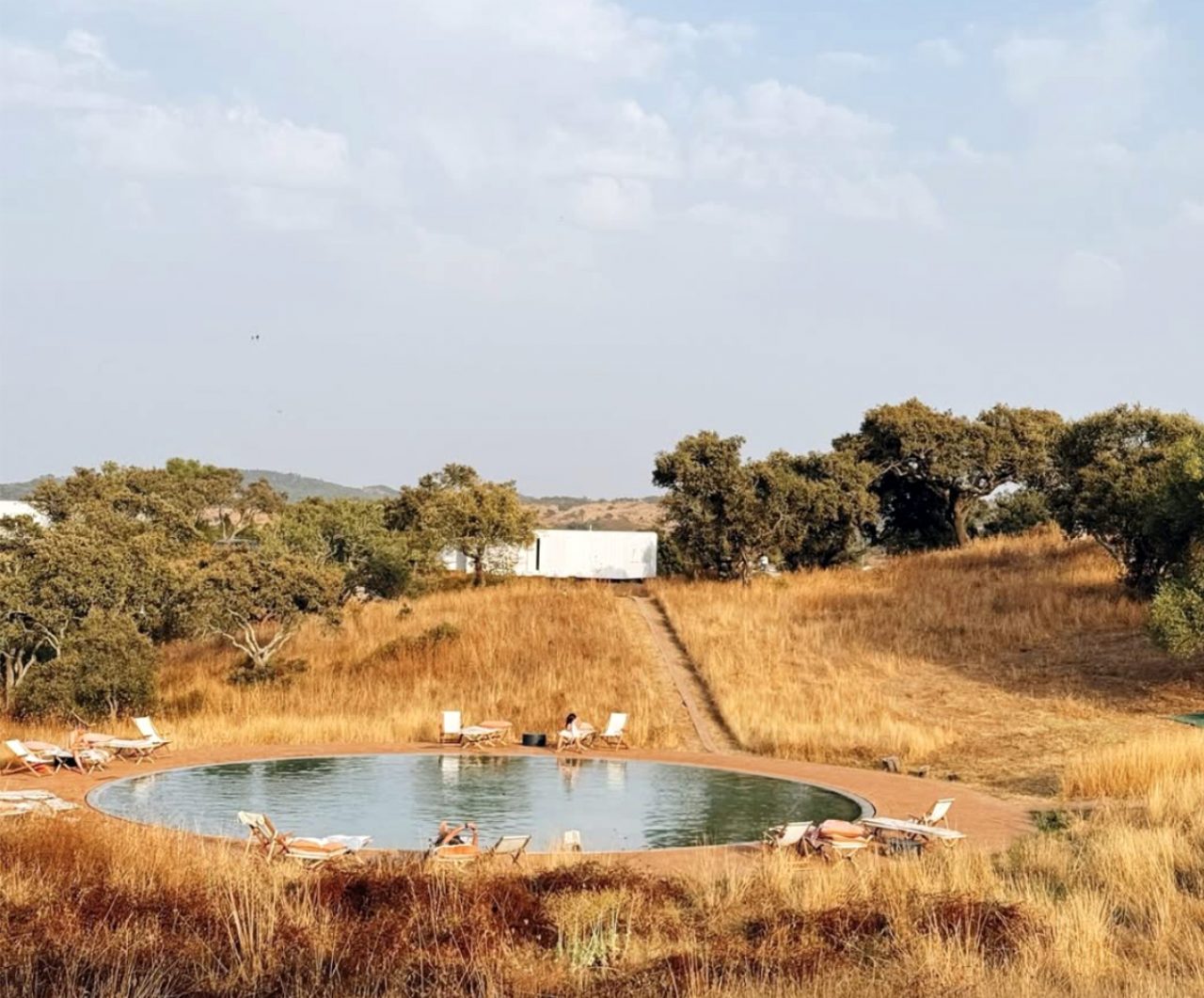
The pool is nestled in a natural clearing with a south-facing meadow, sheltered from the wind and oriented to follow the slope of the valley. Its circular shape fits harmoniously into the contours of the land. A sun deck surrounds the pool, providing space for loungers and outdoor furniture, while a large terrace nearby offers an inviting spot for meals and relaxation, with sweeping views over the valley.
A gently winding main access connects all areas of the estate, providing access for both cars and emergency vehicles. Its route follows the natural terrain, minimizing earthworks and preserving the landscape. The gentle slopes make it pleasant to walk or cycle. A network of footpaths complements this main route, offering more direct access to key areas such as the pool, the threshing floor, and the outdoor dining spaces. Informal, unpaved trails also link different parts of the estate, creating a natural and integrated circulation system.
Over time, the estate’s cork oak woodland (the montado) has suffered from degradation caused by unsustainable farming practices that damaged trees and prevented natural regeneration. The project seeks to restore the health and diversity of the woodland, encouraging new growth and improving the ecological balance. Regeneration zones have been created on higher ground, using a mosaic of wooded areas and clearings that both support the forest’s recovery and frame the views between the scattered houses, enhancing privacy and harmony within the landscape.