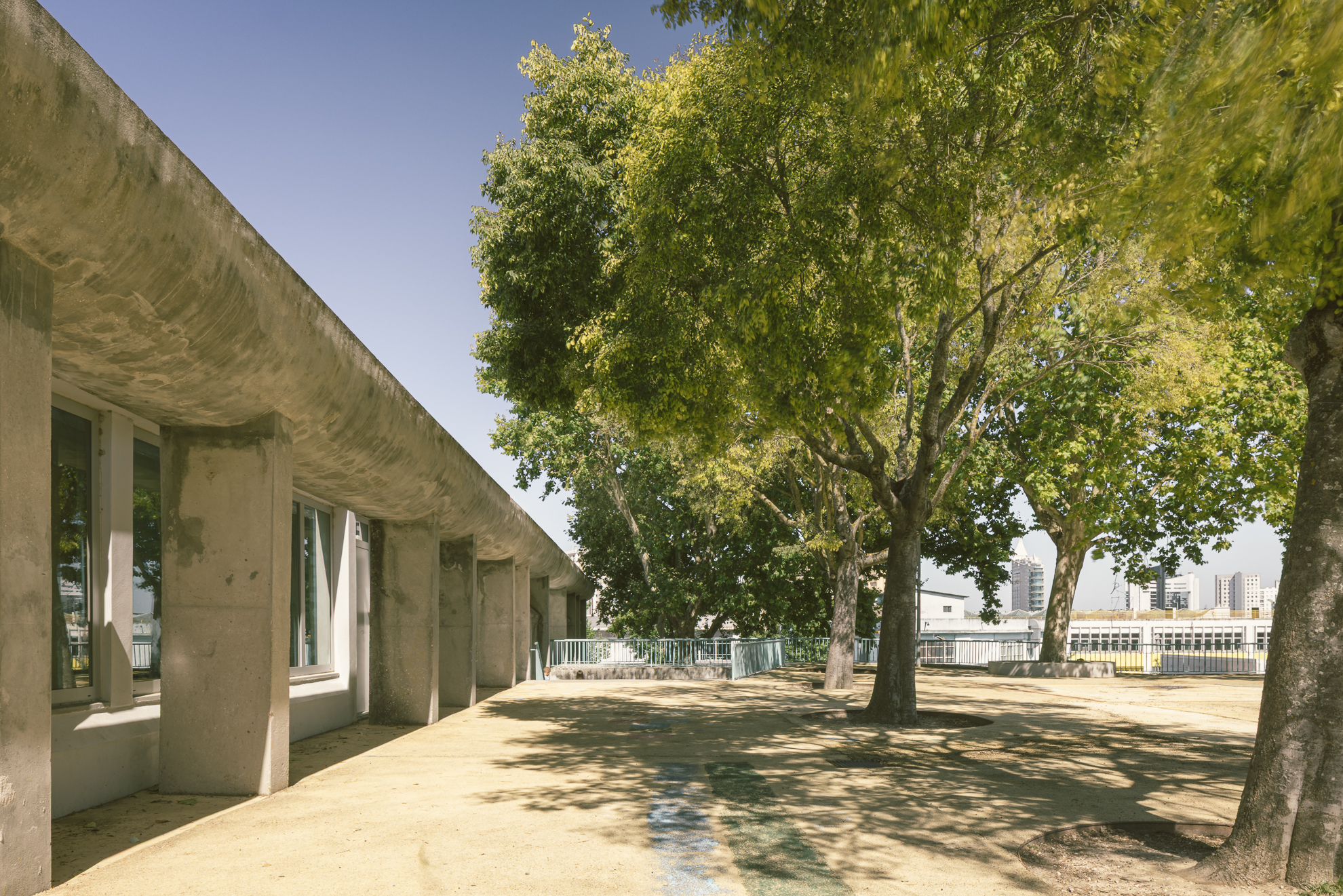
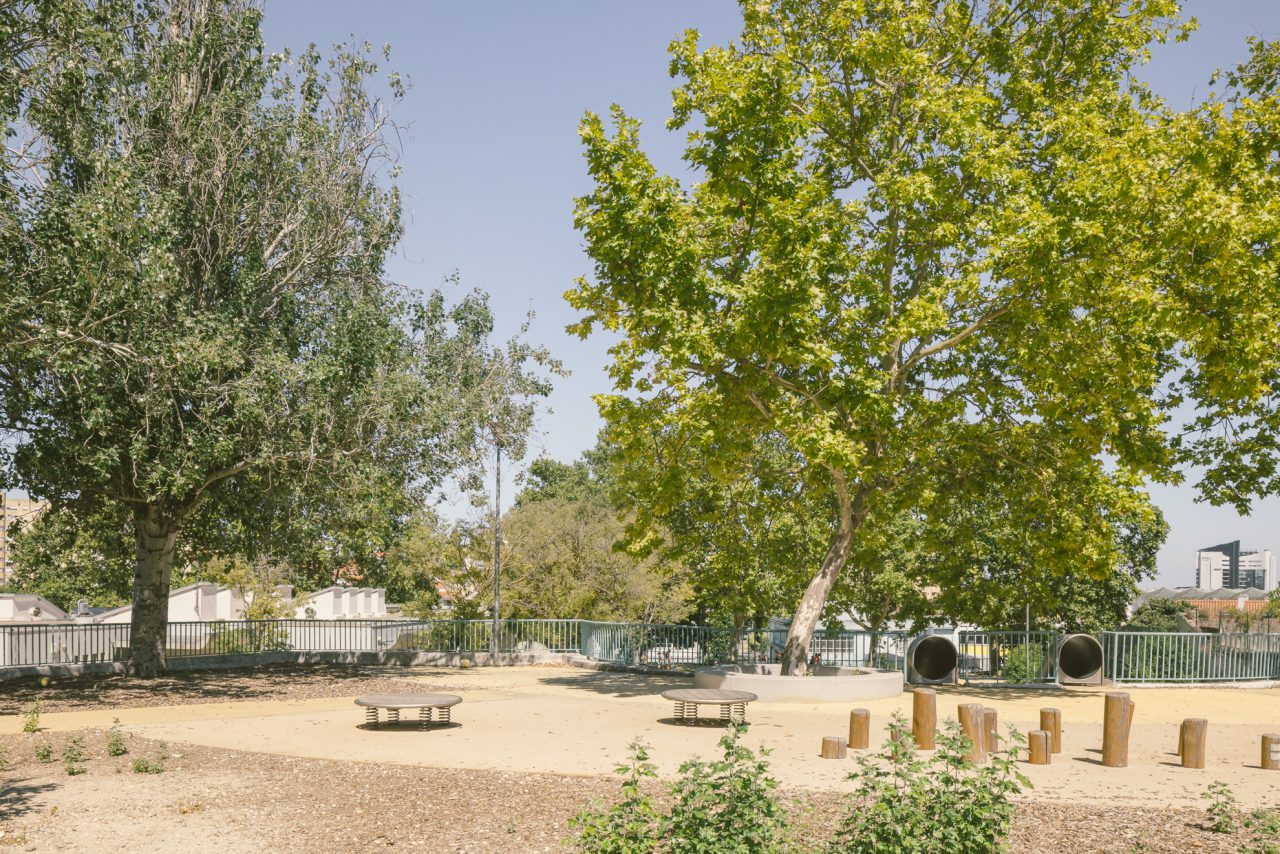
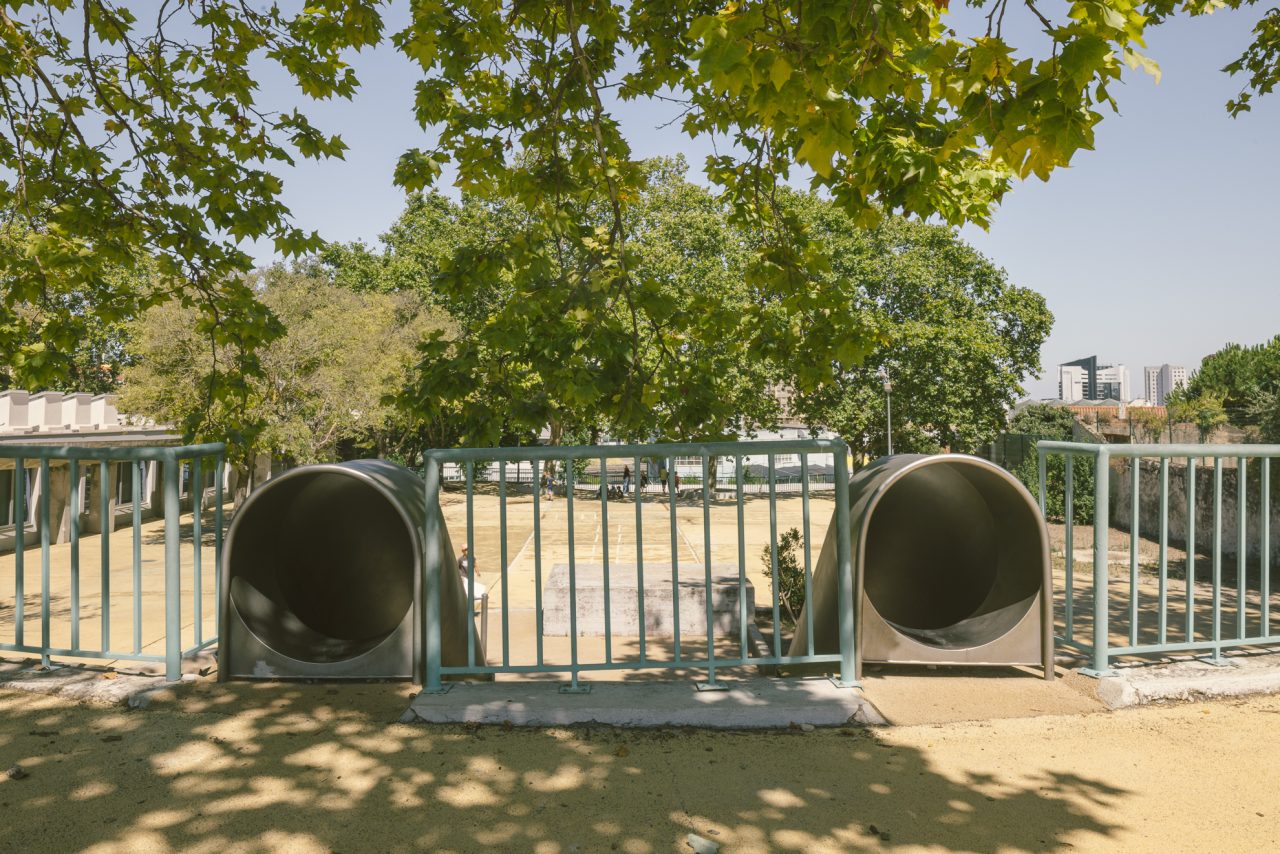
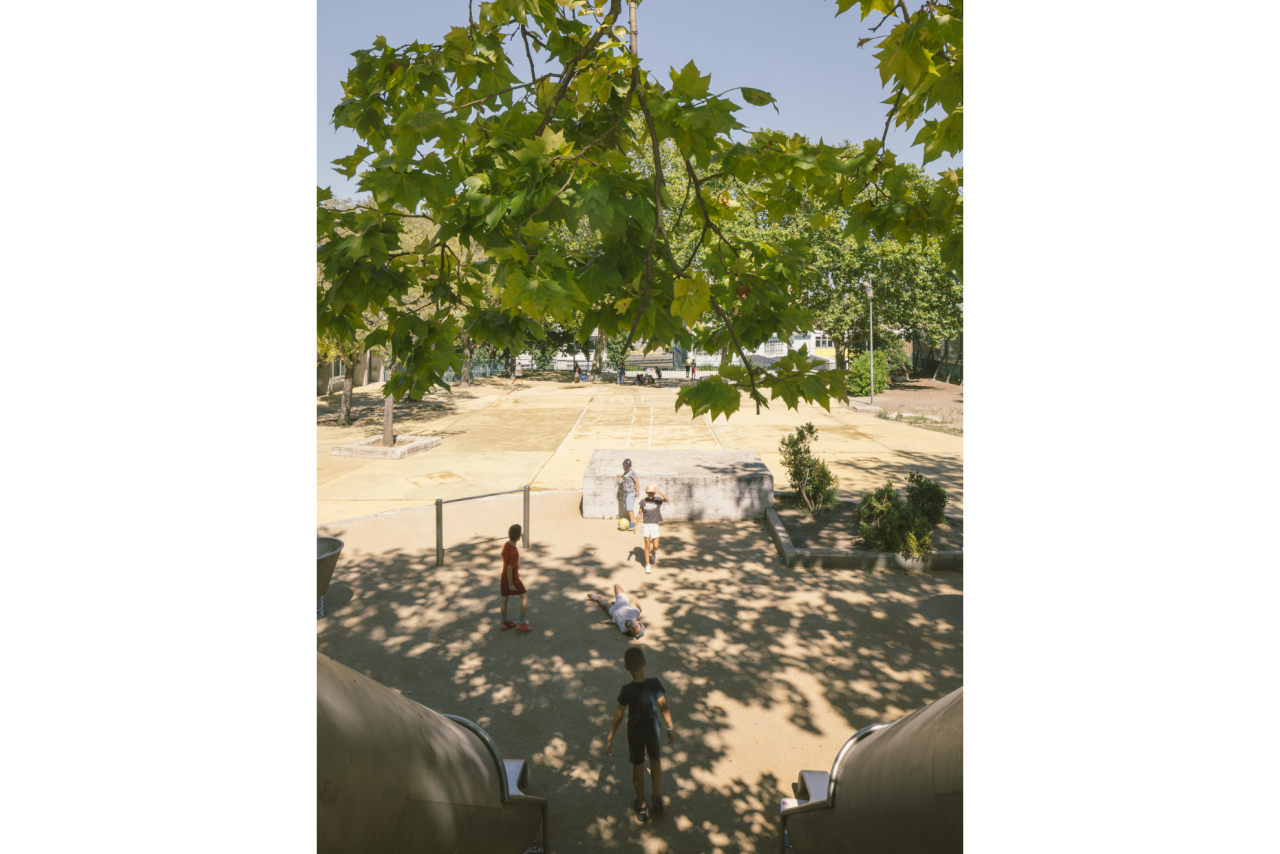
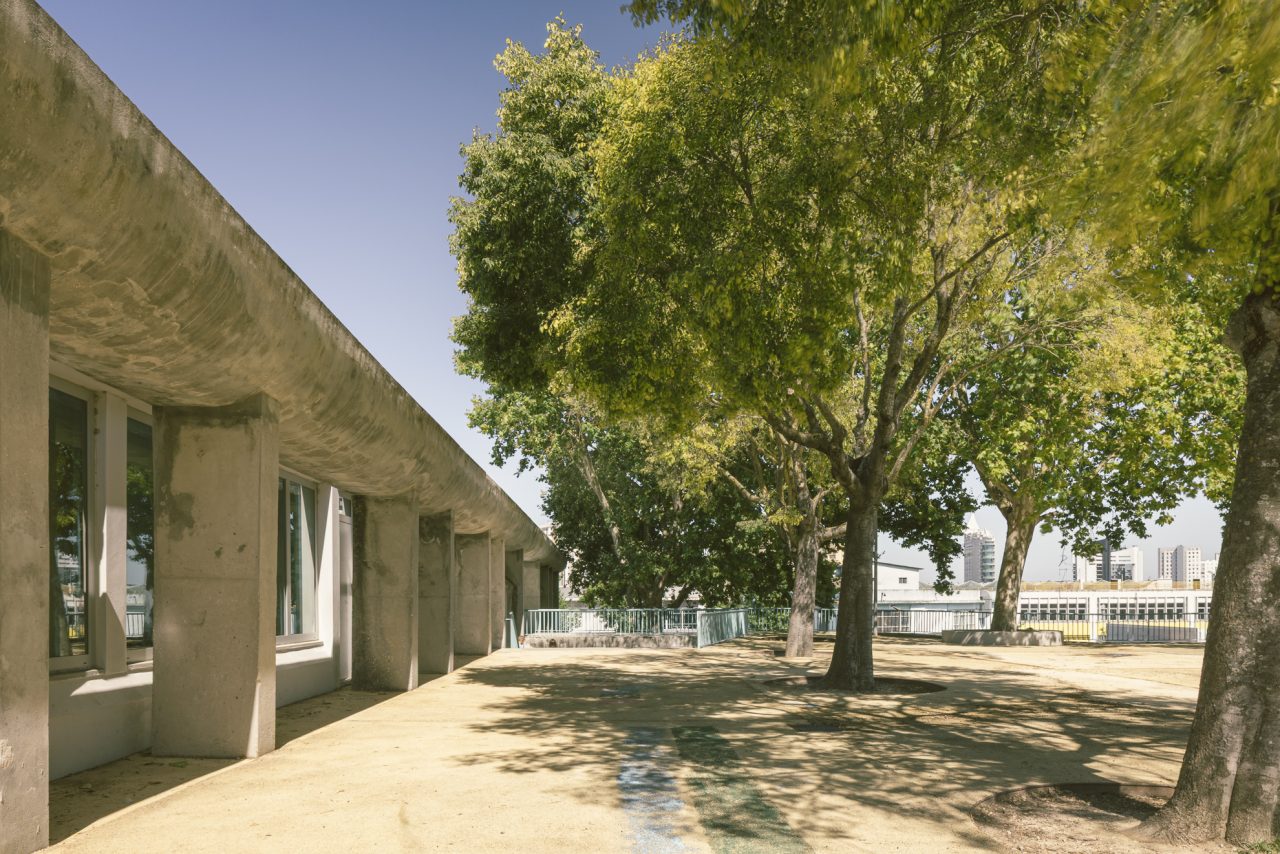
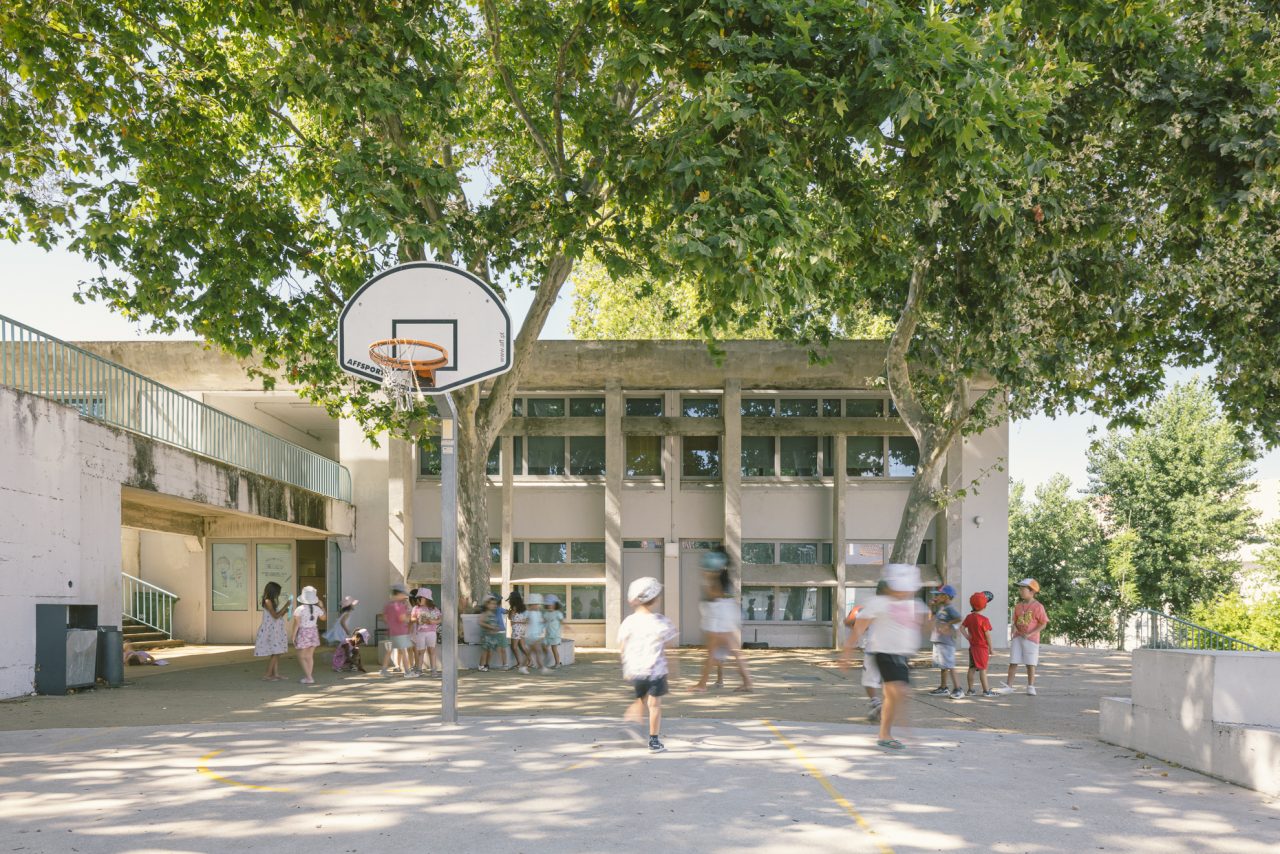
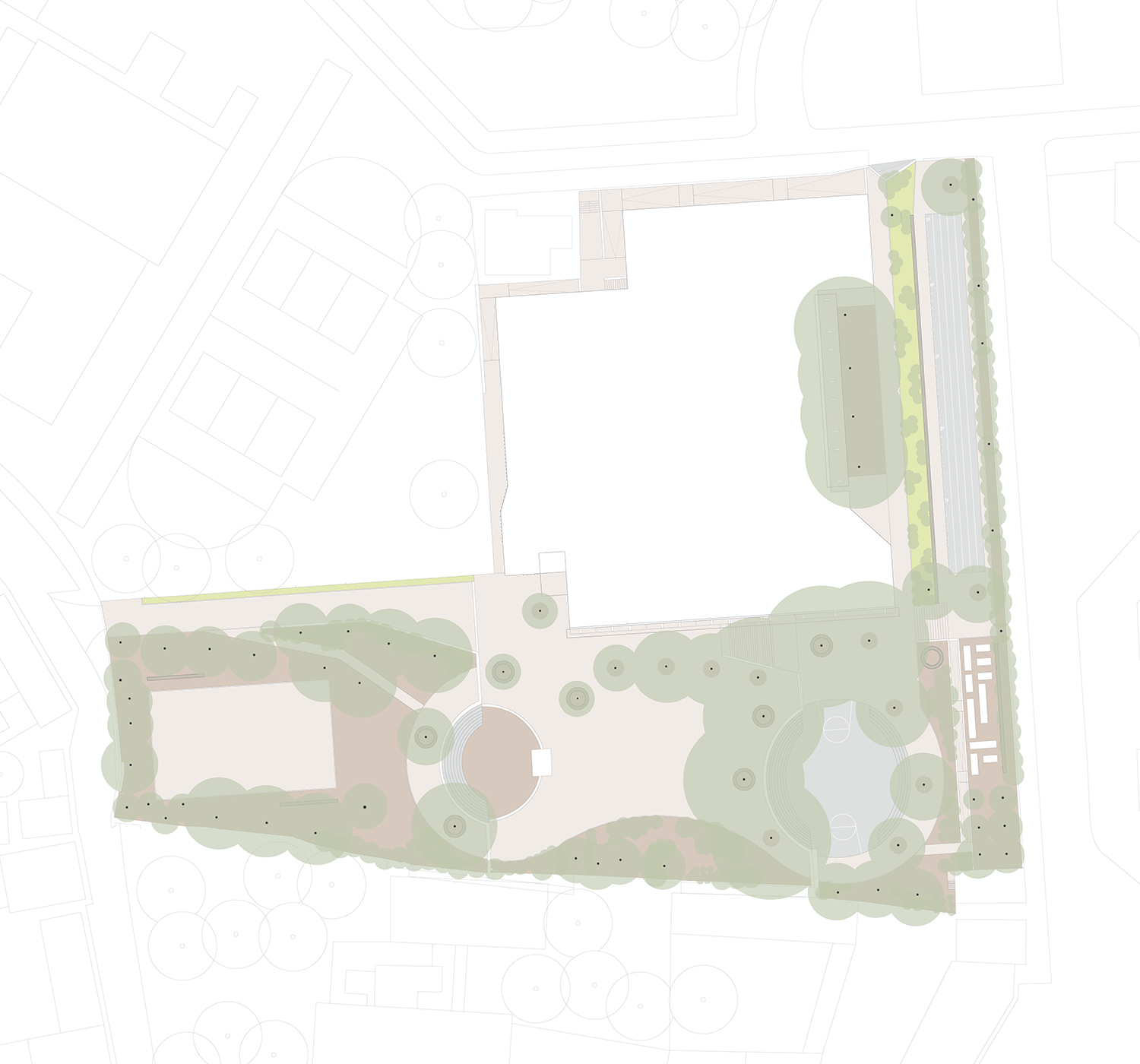
EB1 School No. 36 was originally designed in 1972. Construction began in 1974, was interrupted in 1975, and resumed in 1982. The school finally opened in 1984. Although the project was signed by architect Fernando Gomes da Silva, it was actually designed by architect Raul Ceregeiro. The school is located in Olivais, Lisbon, on an east-facing slope divided into four terraces — the lowest of which is currently not in use.
The school is part of the teaching model developed by Maria Montessori (1870 – 1952) – the Montessori Method is characterized by an emphasis on independence, freedom with limits and respect for the natural development of the child’s physical, social and psychological abilities. Its architectural materialization was influenced by similar experiments in the United Kingdom and Sweden.
The new project to redevelop the outdoor areas aims to make the most of the existing playground’s natural qualities, staying true to the principles of the original design while creating more opportunities for students to enjoy and engage with the space. With these goals in mind, the original amphitheaters will be preserved, and each terrace will serve a different purpose:
– The first terrace will include a playing field and recreational equipment;
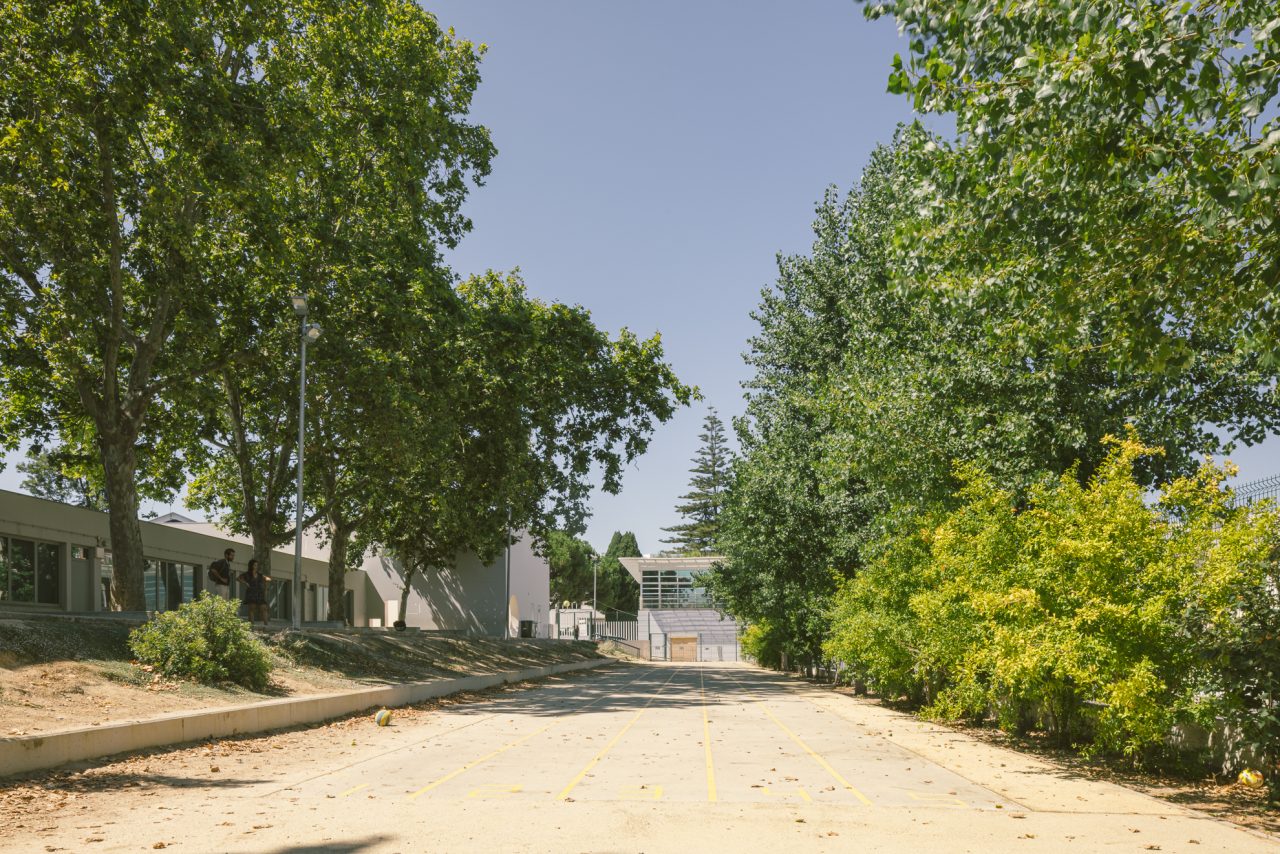
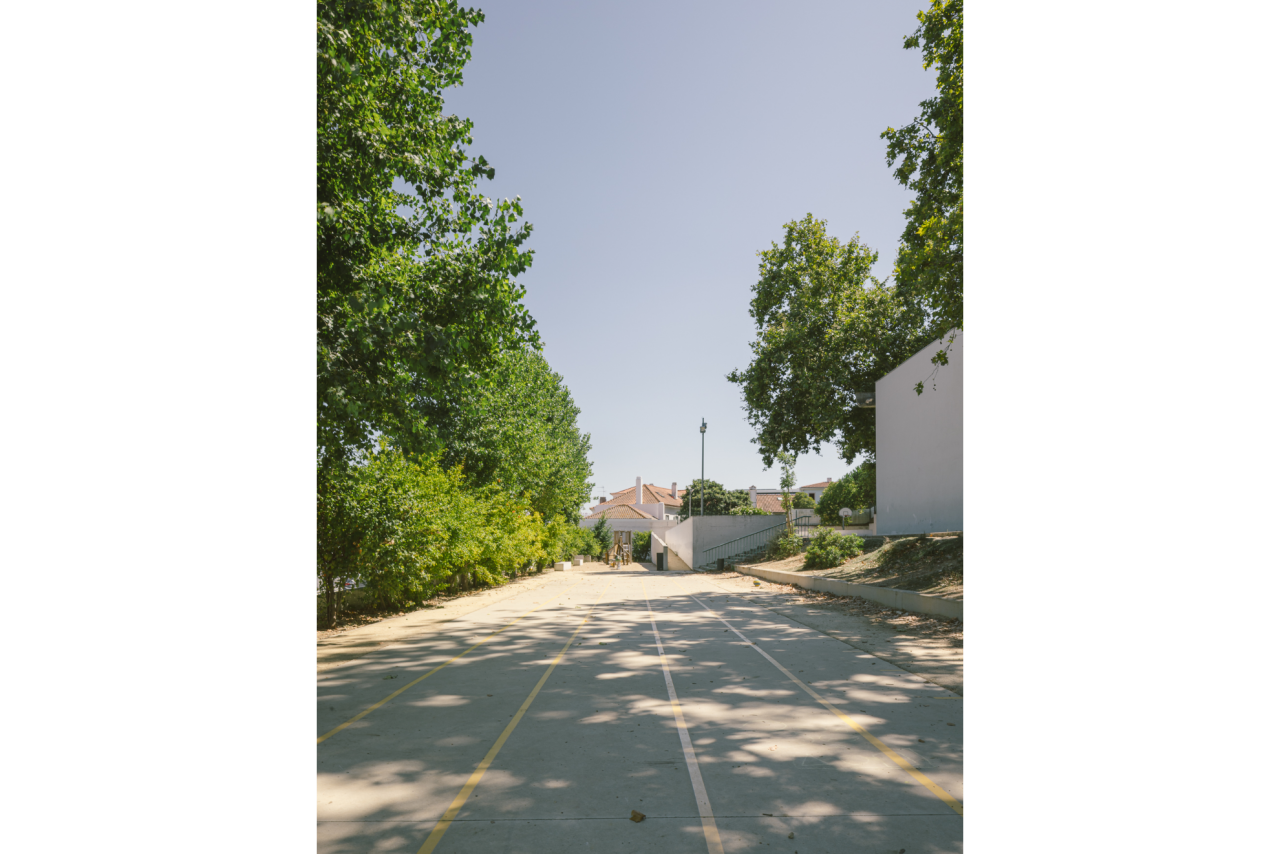
– The second terrace will remain an open, hard-surfaced area free of obstacles;
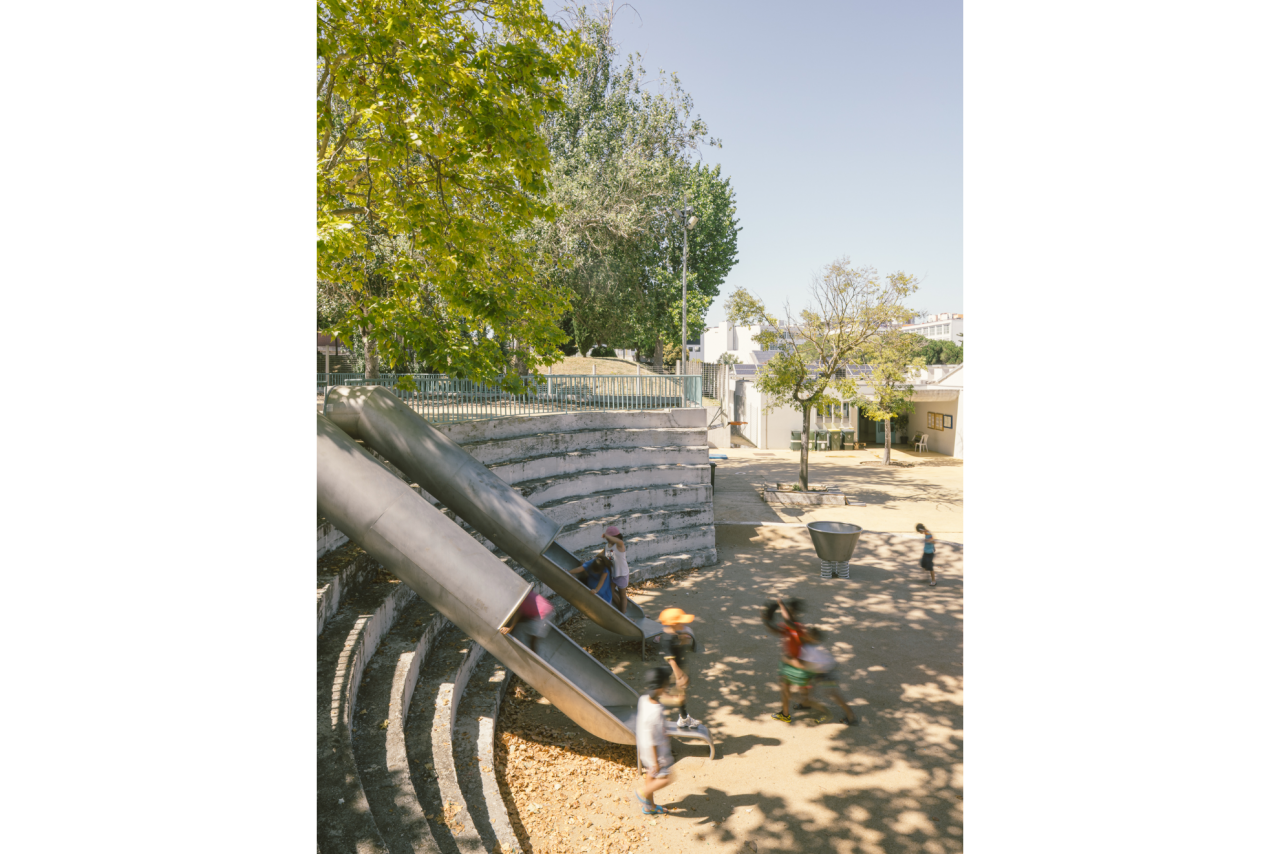
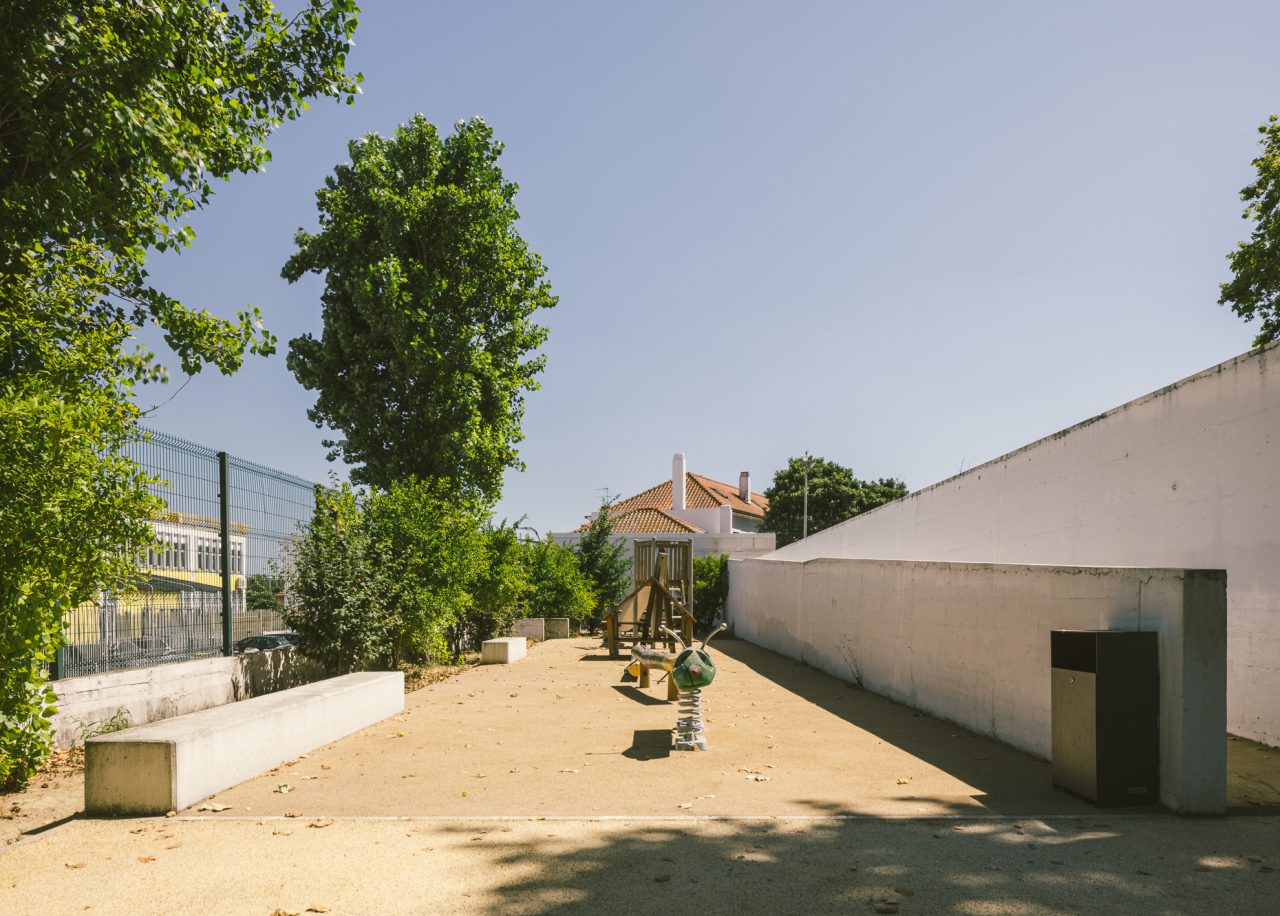
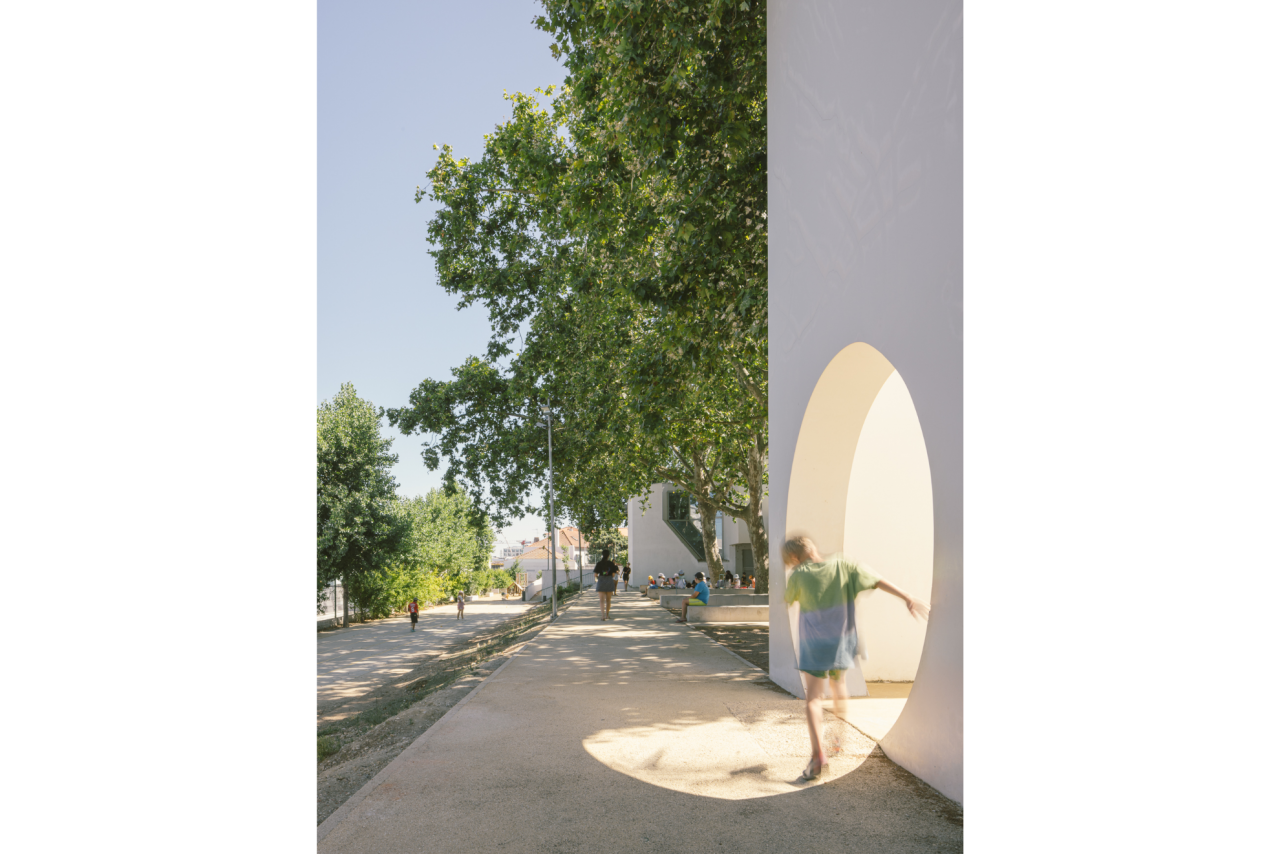
– The third terrace will continue to feature the main amphitheater for performances and organized games. On the east side of the building, next to the kindergarten area, age-appropriate play equipment will be installed;
– The proposal also includes reopening the fourth terrace for school use, adding a vegetable garden and a small athletics track.
The new layout introduces a variety of textures across the terraces — from solid paved areas to softer surfaces such as pine bark, along with patches of exposed natural soil that will help children connect more directly with nature and the cycles of the earth. Vegetation will play a key role too, offering a mix of textures and encouraging a sense of contact with the natural world. The planting will reflect the rustic character of Portugal’s native landscapes, sparking familiarity and connection, while seasonal changes in flowering and fruiting will bring subtle touches of color throughout the year.